.
.
 For a better experience on PITT OHIO, please
update your browser.
For a better experience on PITT OHIO, please
update your browser.
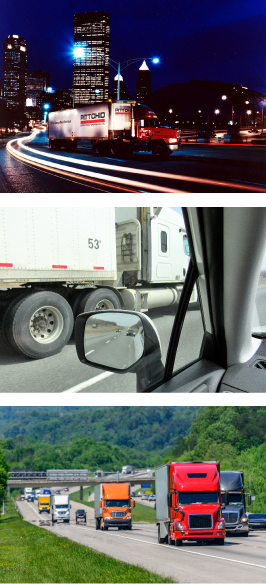
Sharing the road with semi-trucks requires extra care and awareness. These massive vehicles serve as the backbone of our supply chains, transporting essential goods from coast to coast. However, their immense size and substantial weight introduce unique challenges for motorists. By mastering key safety strategies, you can dramatically reduce the risk of collisions and promote smoother, safer travel for everyone on the road.
Explore our comprehensive guide to the top 10 safety tips for driving near semi-trucks, designed to empower you with practical knowledge and confidence behind the wheel:
If you can’t see the truck driver’s mirrors, the driver can’t see your vehicle. These blind spots, often called “no-zones,” exist along the sides and directly behind a semi-truck. Always position your car so you’re visible to the truck’s mirrors, and avoid lingering in these areas to reduce the risk of an accident.
Semi-trucks need extra space for turns, especially to the right. Never try to squeeze between a turning truck and the curb—these vehicles swing wide and can easily trap or collide with nearby cars. Always give trucks the room they need to complete their turns safely.
Because semi-trucks require significantly more time and distance to slow down due to their weight, always ensure ample space before merging in front of them. Cutting in too closely can make it impossible for the driver to brake in time, increasing the risk of a collision.
Pass only on the left side, where truck drivers can see you best, and move ahead efficiently without lingering in blind spots.
Tailgating a truck is dangerous. Not only will you be in a blind spot, but you won’t be able to see what’s ahead on the road.
Truck drivers rely on early signals to judge your intentions and adjust their driving. Always signal well before turning or changing lanes so they have enough time to slow down or maneuver safely.
When driving near trucks, avoid sudden stops or abrupt lane changes in front of them. Trucks are heavier and need more time and distance to react safely. Always ensure there’s ample space and signal clearly before merging or stopping. Smooth, predictable driving helps everyone stay safe on the road.
When weather turns bad or you're on steep inclines, trucks naturally slow down due to their size and weight. Allow extra room for these vehicles, avoid cutting in, and stay patient—aggressive maneuvers can increase risk in these challenging conditions.
Fully loaded trucks can weigh up to 80,000 pounds and require greater stopping distances and wider turns than passenger vehicles. Always give trucks extra space when merging, passing, or stopping near them, and never underestimate the time they need to respond safely.
Staying alert and focused helps you anticipate what trucks (and other drivers) are doing, especially in heavy traffic or near construction zones.
|
Remember, sharing the road with trucks means adopting a mindset of respect, patience, and proactive safety. By understanding the unique challenges truck drivers face and adjusting your driving habits accordingly, you contribute to a smoother, safer journey for everyone. A few thoughtful choices behind the wheel not only protect you and your passengers, but help ensure that all travelers reach their destinations safely.
Safe travels!