.
.
 For a better experience on PITT OHIO, please
update your browser.
For a better experience on PITT OHIO, please
update your browser.
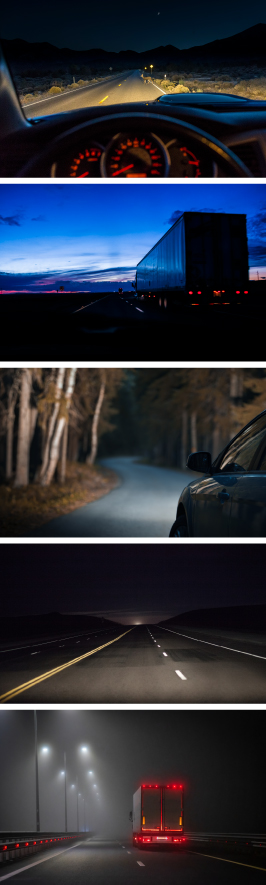
As the days get shorter and the sun sets earlier, many of us find ourselves spending more time driving in the dark. Reduced daylight can make even familiar routes feel different, increasing the need for extra caution and preparation.
This article is designed to help you drive smart - offering practical tips to help you stay safe, alert, and confident behind the wheel this fall and winter months.
Make sure your headlights are clean, properly aligned, and in working order. Dirty or foggy headlights can significantly reduce the amount of light reaching the road, making it difficult to see hazards. It’s also important to check for any burnt-out or dim bulbs, as these can decrease your ability to spot obstacles and reduce your visibility to other drivers. Misaligned headlights not only limit your own view but can also shine directly into the eyes of oncoming motorists, creating a dangerous situation for everyone on the road.
High beams can improve visibility on dark roads, making it easier to spot obstacles, road signs, or potential hazards that might otherwise go unnoticed. However, they should always be dimmed when approaching or following other vehicles to avoid blinding other drivers and causing a dangerous situation. Using high beams responsibly not only helps you see better but also ensures the safety and comfort of everyone sharing the road. Additionally, be mindful of weather conditions, as high beams can reflect off fog, rain, or snow and actually reduce your ability to see clearly.
A dirty windshield can scatter light from headlights and street lamps, making glare much worse and reducing your ability to see clearly at night. Regularly cleaning both the inside and outside surfaces of your windshield helps ensure maximum visibility and prevents buildup of dust, smudges, or streaks that can distract you while driving. By maintaining a spotless windshield, you’ll reduce eye strain and drive more safely, especially during the darker fall and winter months.
Dim your dashboard lights so they don’t compete with your view of the road. Bright displays can strain your eyes and make it harder to see in the dark, especially when your eyes need to quickly adjust between looking at illuminated controls and the darkness outside. By reducing dashboard brightness, you’ll minimize distractions and improve your overall night-driving safety.
With less daylight, pedestrians, cyclists, and animals are harder to spot, especially in areas with poor street lighting. Slow down in residential or rural areas, where people and wildlife may unexpectedly cross your path. Stay alert and scan the sides of the road for movement, as visibility can be limited and hazards may appear suddenly. Taking extra caution during these hours helps prevent accidents and ensures the safety of everyone on the road.
If oncoming headlights are blinding, shift your eyes slightly to the right edge of your lane and use road markings as a guide. This technique helps you maintain your lane position without staring directly into the glare, reducing eye strain and improving your focus on the road. Additionally, always keep your mirrors clean, as dirt and smudges can scatter light and increase glare from vehicles behind you. Adjust your rearview mirror to the night setting to further minimize glare and make it easier to see approaching cars without being blinded by their headlights.
Reduced visibility means less reaction time, making it more difficult to spot obstacles or respond to sudden changes on the road. To stay safe, drive a little slower than you might during the day and leave extra space between you and the car ahead. This increased following distance gives you more time to react if the vehicle in front of you stops suddenly or if unexpected hazards appear. By adjusting your speed and spacing, you significantly lower the risk of accidents in low-light conditions.
Schedule regular eye exams, especially if you notice increasing difficulty driving at night. Your eye doctor can identify potential vision problems, such as cataracts or changes in prescription, that may impact your nighttime driving safety. Wearing anti-reflective lenses can also help reduce glare from headlights and streetlights, making it easier to see clearly. Additionally, keeping your glasses or contacts clean ensures optimal vision and minimizes distracting reflections while driving after dark.
Driving at night increases the risk of drowsiness, which can significantly impair your reaction time and decision-making abilities. Avoid getting behind the wheel when you’re tired, as fatigue can make it harder to stay alert and focused on the road. If you start to feel sleepy while driving, don’t try to push through—find a safe place to pull over and rest until you feel refreshed. Taking breaks or even a short nap can help prevent accidents caused by falling asleep at the wheel.
Familiarize yourself with your route before heading out in the dark to minimize surprises and confusion while driving. Mapping out your journey in advance helps you anticipate turns, exits, and any potential road closures. Having GPS or maps ready reduces stress and allows you to keep your focus on the road rather than searching for directions. This preparation not only boosts your confidence but also enhances overall safety during nighttime travel.
|
Driving at night presents unique challenges, but by adopting smart habits and staying vigilant, you can ensure a safer journey. With the right habits and awareness, you can navigate safely no matter the hour. Keep your vehicle maintained, stay focused, and give yourself plenty of time to react. Ultimately, driving smart—by making these small but effective adjustments—greatly reduces the chances of accidents and keeps everyone on the road safer.
Safe travels!